Fresh air auxiliary material one-stop procurement.


Application
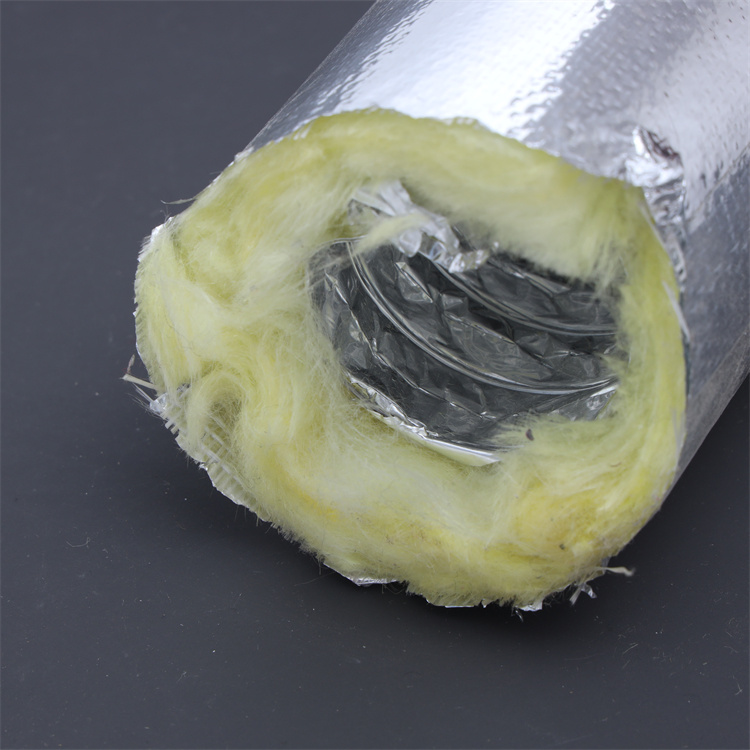
ISO+ (Insulated Flexible Duct) is a series of fully flexible thermal insulation ducts, specially designed for the HVAC market. The ISO+ series aims to minimize heat gain or loss due to the temperature difference between the air flowing inside the duct and the surrounding air. The vapor barrier prevents condensation from forming on the outside of the duct when the temperature is lower than the surrounding air.
Advantages
Standard length is 10 meters, compressed to 1-1.2 meters. Diameter ranges from 76-508mm.
Individually packaged.
Low transportation and logistics costs.
Easy to install on round or oval pipes.
No special tools are required for cutting or fixing.
Does not release toxic gases in case of fire.
Product has passed fire test.
Technical Parameters
| Product | Insulated Flexible Duct | ||
| Inner Pipe | 1 layer aluminum + 1 layer PET / 1 layer aluminum + 1 layer PET + 1 layer aluminum | ||
| Inner Pipe Thickness | 0.023mm/0.032mm | ||
| Outer Jacket | 1 layer aluminum + 1 layer PET | ||
| Outer Jacket Thickness | 0.023mm | ||
| Insulation Material | (Yellow/Red/White) Fiberglass | ||
| (Fiberglass) Thickness | (16kg/25mm, 24kg/25mm, 32kg/25mm) | ||
| (R-value) | R3.6/R4.0/R4.1 | ||
| (Wire Diameter Range) | 0.7mm-1.2mm | ||
| (Diameter) | 76mm-508mm | ||
| (Temperature Range) | -30/+150℃ | ||
| (Maximum Airflow Velocity) | 30m/s | ||
| (Normal Length) | (10m) | ||
| (Maximum Positive Working Pressure) | (3000pa) | ||
| (Packaging) | (1 per box) |
Keywords
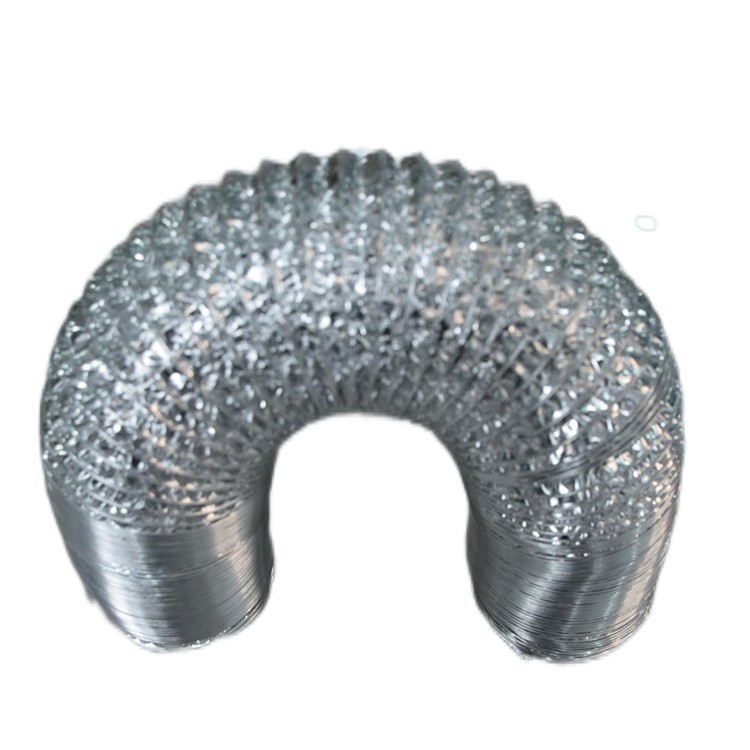
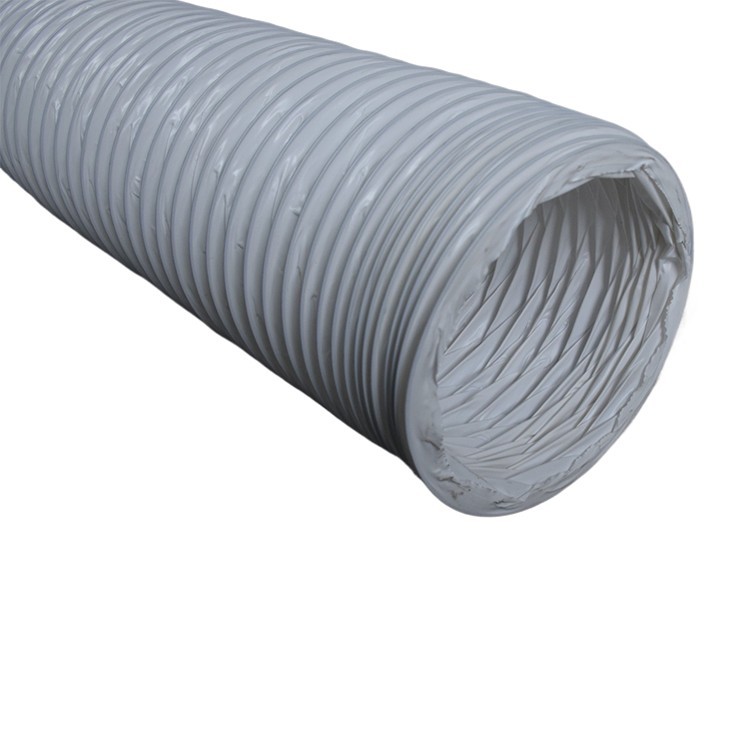
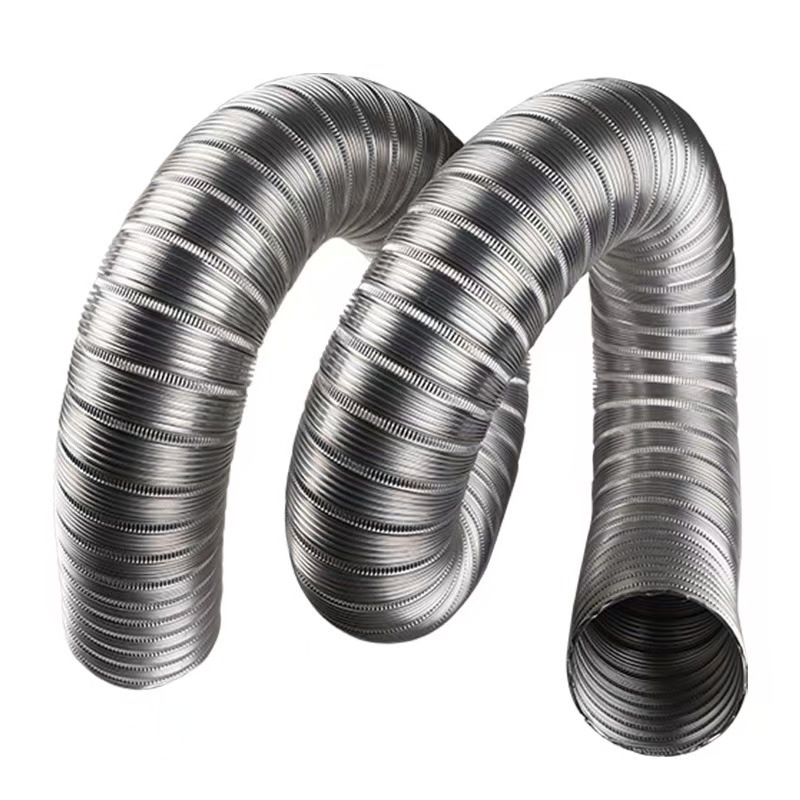
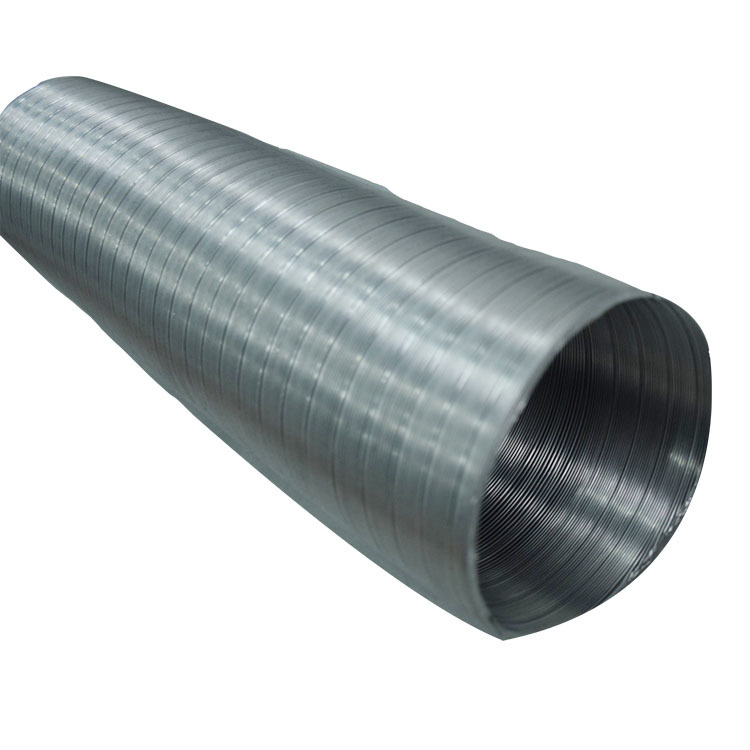
Aluminum foil tube | Pvc pipe | Glass fiber cloth composite pipe | Canvas retractable duct
Insulated flexible conduit
Contact Us
Classification
More Products




Mobile: +86-15358982735
Add: No. 99, Tongyun Road, Yunlin Street, Xishan District, Wuxi City, Jiangsu Province


Request Quote